
Choosing
The Ultimate Gift Guide: How to Choose the Right Gift for Any Occasion
Most gifts go sideways for the same reason: we start with an object instead of a person. This guide walks through a quieter method — who it’s for, why you’re giving it, and what will actually get used — then points you toward sets, names, and boxes only where they help.
Published August 30, 2026
You already know the date. What’s harder is the gap between “I should get them something” and a gift that feels like you were paying attention. That gap isn’t closed by a longer shopping list. It’s closed by a few honest questions, asked in order.
Start with the relationship, not the aisle
A gift for your sister is not a gift for your manager. A gift for new parents is not a gift for a couple celebrating twenty years. Name the relationship out loud: partner, parent, friend, coworker, client, teacher, neighbor. Then name how close you actually are. Over-intimate gifts from a distant colleague can feel as awkward as a generic mug from someone who knows you well.
If you’re stuck, browse gifts by recipient first, then occasions. The catalog is organized that way on purpose — so you don’t have to invent a category that isn’t there.
Let the occasion do some of the work
Occasions tell you the job of the gift. A birthday can be a little selfish — something they wanted. An anniversary is usually shared. A baby shower should survive the first month at home. A housewarming should belong in a new room. A thank-you should be easy to open and easy to understand.
Birthdays, anniversaries, and holidays
Birthdays reward observation: a color they always wear, a drink they actually make, a hobby they already have space for. Anniversaries reward a date or two names more than a slogan. Holidays — Christmas, Mother’s Day, a New Year drop-by — often work better as a ready-to-give set than as five unrelated items in a bag.
Baby, wedding, graduation, new job, new home
Life-change gifts should reduce a decision, not add one. New parents need things they can use with one hand. Newlyweds often still have two of everything. Graduates and new-job gifts can be desk-friendly without looking like branded swag. Housewarmings land when the piece can live in the kitchen, the couch, or the entry — not in a drawer of “nice stuff we don’t use.”
Personality, usefulness, and sentiment
Ask which of these the person actually values. Some people light up at a keepsake. Others would rather have something they drink from every morning. Many want both, in that order: useful first, a name or date second.
- If they are practical, lead with use: a mug, tumbler, tote, or a boxed set they don’t have to assemble.
- If they are sentimental, a name, a date, or a short line can carry the gift — only on products that list those fields.
- If they already “have everything,” skip novelty. Shared experiences, paired pieces, and a note usually beat another gadget.
Sentiment without a real object behind it is just a card. An object without a reason is clutter. The middle is a piece they will see in ordinary life — coffee, a walk, a baby’s first months — with a detail that belongs to them.
Budget without apology
A smaller budget is not a lesser gift. It is a constraint, which often makes the choice cleaner. Decide the number first. Then look at gifts under $25, under $50, or under $75 if you want the storefront’s free-shipping threshold in play — checkout still shows the live rate for the address.
If you can spend more, “luxury” here is a price filter, not a medal. A $100 piece should still pass the same test: would they use it, keep it, or remember who it came from?
When personalization helps — and when it doesn’t
A name is not automatically better. It is better when the object is made to hold it. TheMoon Gift only shows name, date, or message fields on gifts that support them. Preview on the product page is a placement guide, not a factory proof. Photo fields stay off until private storage is connected.
Skip personalization if you don’t know the spelling, the nickname they actually use, or whether they want their name on something they carry to work. When you do know, personalized gifts are the short path — then open the product and fill only what’s listed.
One piece, a set, or a box you build
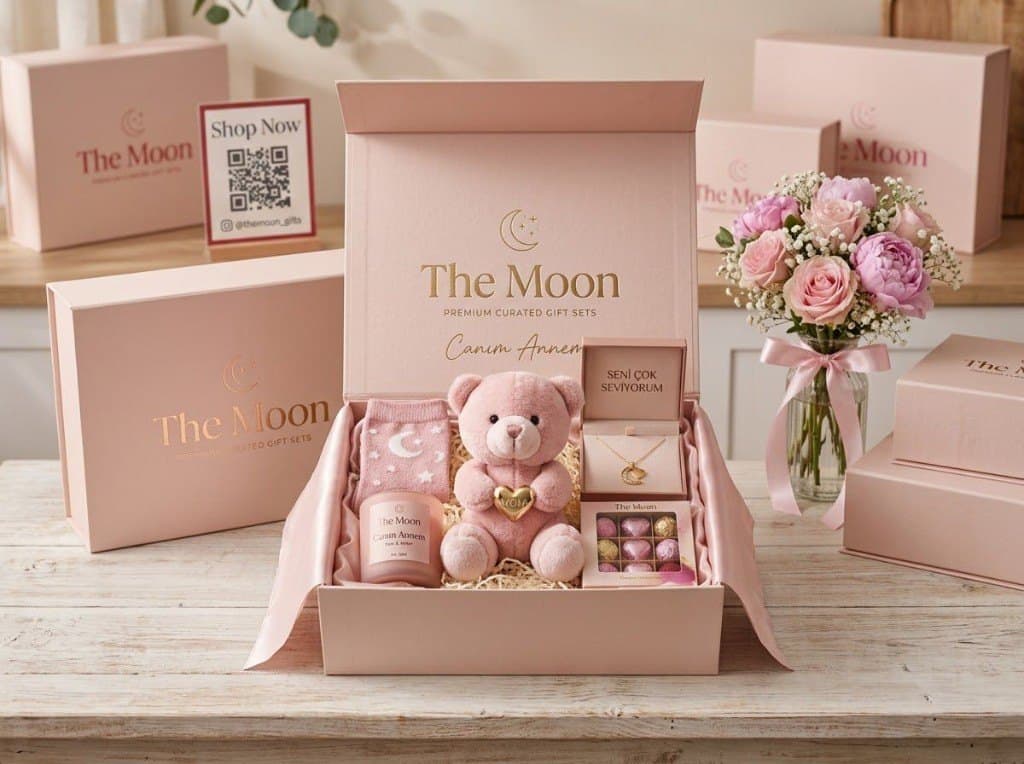
A single piece is right when you already know the object. A gift set is right when you want the wrapping and the mix decided for you. Build your own gift is right when you want to choose the box, add eligible pieces, personalize the ones that need it, and include a message — with a small minimum so the box isn’t empty.
Presentation is part of the gift. A set in a box is easier to hand over than three loose items. A gift message in the cart is often enough; gift wrap is available when a wrap product is configured. None of that replaces a sentence in your own handwriting if you’ll see them in person.
Quick gift-finding checklist
Work down the list before you open a product page
- Who is it for — and how close are you, really?
- Why are you giving it? Birthday, thank-you, new baby, new job, just because.
- What do they already enjoy — drink, rest, work, home, a shared joke?
- What’s the budget, including shipping at checkout?
- Would a name or date add anything, or would it just look forced?
- Should this be one item, a ready set, or a box you assemble?
If you can answer those six, the catalog gets quieter. Use the gift guide for shorter merchandising notes, or stay here in Gift Stories when you want the longer reasoning.
A few occasions, said plainly
- Thank-you and teacher gifts: keep them office- or classroom-appropriate. A short note does more than a loud print.
- Corporate and new-job gifts: useful on a desk, not logo-heavy. If you need several, contact us.
- Sympathy: quieter materials, no jokes, no pressure to “cheer them up.”
If a product isn’t in the shop, it isn’t here. We don’t set hospital rules or promise a delivery day on this page.
Questions people actually ask
When you’re ready to pick the object
Browse sets if you want the mix decided, or start a box if you’d rather choose the pieces yourself.


